
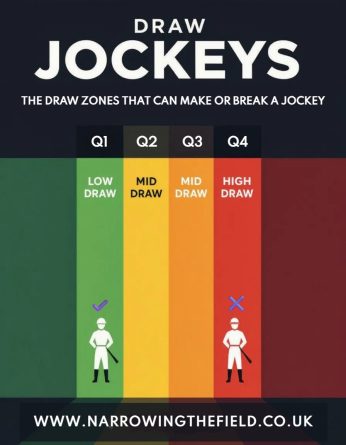
THE DRAW ZONES THAT MAKE OR BREAK THE TOP JOCKEYS
📍 Five Tracks: One Good – One Bad (for each track)
Most punters spend their time analysing the horses… I’m one of those punters…
Some look at trainers… I’m also one of those…
A few dig into pace maps… they also play a big part in my analysis…
But very few study the one factor that regularly shapes race outcomes at every flat track on the calendar…
Where a JOCKEY starts.
Not the specific stall number… but the draw quarter – the zone of the draw a jockey launches from – is one of the most overlooked behavioural patterns in racing. And yet, for certain jockeys at certain tracks, it’s the difference between a serious positive to their chances and a potentially damaging blow to their odds of landing the win.
This FREE NTF GUIDE uncovers those patterns at FIVE separate track.
In the guide you’ll see…
- The draw zones the top jockeys quietly dominate from
- The quarters where their strike‑rates collapse
- The setups where they repeatedly outperform the market
- The negative angles that most punters never notice
- The behavioural tendencies that have held true for more than a decade
These aren’t opinions. They’re not hunches. They’re not “angles for the sake of angles”.
They’re repeatable jockey behaviors, backed by long‑term data, and built to give punters like YOU, clarity and confidence… as well as adding an extra string to your punting bow.
Enter your name and best email in the form below… and gain instant access to this unique and easy to follow FREE NTF Guide…
If you’ve ever wondered why some jockeys look unbeatable from certain positions – and hopeless from others – this guide will show you the patterns behind the results.
Welcome to… Draw Jockeys: The Draw Zones That Make or Break a Jockey.
Get your copy NOW!
🔍 See the patterns most punters never even notice…